

By Business Insider Reporter and Agencies
Glaciers may feel like distant, icy relics to many in East Africa, but their decline carries profound consequences for the region’s economies, ecosystems and long-term development prospects. Around the world, these frozen reservoirs are melting at unprecedented rates, triggering disasters and threatening water security for billions. And here in East Africa, where the continent’s last remaining glaciers cling to the peaks of Kilimanjaro, Mt. Kenya and the Rwenzori Mountains, the alarm bells are ringing loudest.
This year alone, catastrophic avalanches, landslides and glacial lake outburst floods devastated communities in Switzerland, Nepal and Pakistan. Though thousands of kilometres away, these events offer a preview of risks facing East Africa as glaciers shrink and permafrost thaws. Scientists estimate that more than 15 million people globally are at risk from such disasters, as warming temperatures destabilise mountain environments worldwide.
According to the World Meteorological Organization, 2024 marked the third consecutive year in which all monitored glacier regions reported mass losses. Shifts in temperature, rainfall and snowfall are accelerating retreat everywhere from the Andes to the Himalayas – and the consequences are already reshaping lives.
A critical but fragile resource
Glaciers hold around 70 per cent of the world’s freshwater, releasing it gradually in warmer months to sustain rivers, farms, hydropower and wildlife. Their meltwater supports more than two billion people worldwide. Yet as atmospheric greenhouse gases increase, the balance is tipping.
More frequent storms, dust storms and air pollution are depositing soot and sand on glaciers, darkening the ice and absorbing more heat. This accelerates melting, while thawing permafrost releases trapped methane and carbon – an unsettling feedback loop further heating the planet.
The consequences stretch far beyond shrinking ice. Flood risks increase in the short term as glacial lakes swell. Over the longer term, diminishing meltwater threatens river flows, food production and hydropower – essential pillars of development across Africa and beyond. Biodiversity is also at risk as freshwater ecosystems lose stable habitats, and the collapse of microbial communities in glaciers has consequences scientists are only beginning to understand.

Choices made over the next decade may seal the fate of the world’s remaining ice. At 1.5°C of warming, just over half of current glacier mass could survive, but at 2.7°C – the level toward which current global policies are steering us – only a quarter would remain.
For some countries, the losses are already irreversible: Slovenia and Venezuela have lost all their glaciers; tropical glaciers in Uganda, Peru and Indonesia could disappear entirely before century’s end.
East Africa’s vanishing ice
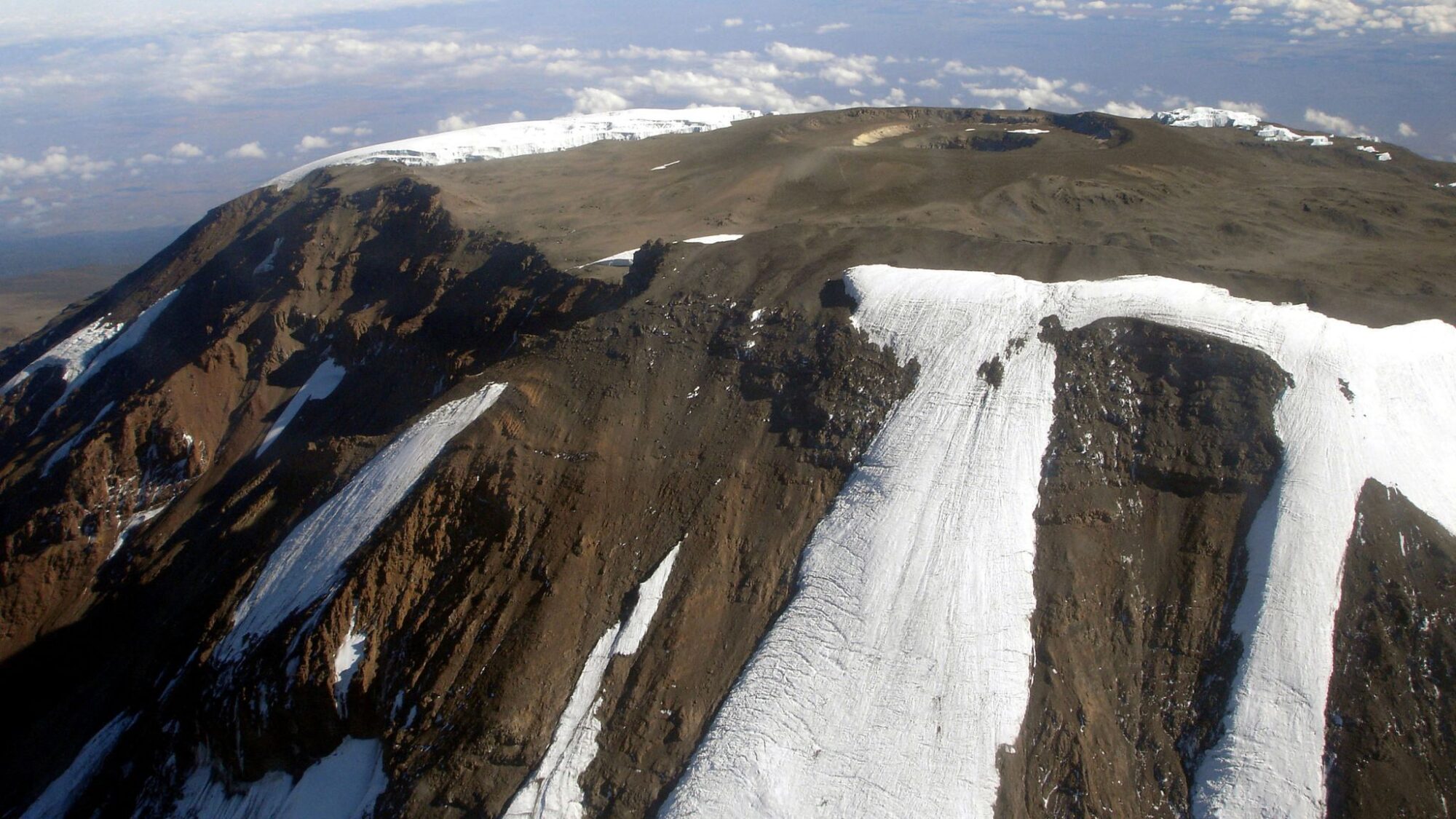
East Africa is now ground zero for glacial retreat. The region’s last glaciers – on Kilimanjaro in Tanzania, Mt. Kenya and the Rwenzori range – are disappearing faster than almost anywhere else on Earth. In 2022, the total remaining glacier area across the three peaks was just 1.36 square kilometres, a dramatic fall of more than 300 per cent since 2000.
Projections are stark. Kilimanjaro’s ice could vanish by 2040. Mt Kenya’s glaciers may be gone by 2030. The Rwenzori glaciers, once celebrated by explorers for their dramatic beauty, are retreating year after year.
The economic and social impact is already visible. The Ngare Ndare River, fed by Mt Kenya’s ice and snowmelt, has declined by 30 per cent in the past decade. More than two million people in Kenya and Tanzania rely on this water for drinking, farming and livestock. Reduced flows mean lower crop yields, shrinking milk production, soil erosion, water-borne diseases and an increased risk of landslides.
Such pressures affect not only rural households but also regional industries. Agriculture, hydropower generation, tourism and urban water supply all depend on the stability of mountain catchments.
Building resilience in the mountains
To respond to these escalating risks, the United Nations Environment Programme (UNEP) is working with governments, civil society and communities through initiatives such as the Adaptation at Altitude programme and the Mountains ADAPT solutions platform. These efforts focus on diversifying livelihoods, restoring degraded landscapes, supporting climate-resilient agriculture and strengthening forest ecosystems.

A new Mountains ADAPT Small Grants Programme, funded by Austria and implemented since 2023, supports local organisations to design and scale community-led adaptation solutions.
One recent beneficiary, the Yiaku Laikipiak Trust near Mt Kenya, used its grant to expand climate-smart farming and improve water systems, helping more than 400 Indigenous Yiaku people build resilience to environmental and market shocks.
Putting ice on the global agenda
The rapid loss of glaciers has elevated the issue to the highest levels of global environmental diplomacy. Ahead of the United Nations Environment Assembly (UNEA-7) in Nairobi this December, member states are debating a new resolution on glacier and cryosphere protection. The negotiations build on the UN General Assembly’s declaration of 2025 as the International Year of Glaciers’ Preservation and the establishment of 21 March as the World Day for Glaciers.
This year UNEP Patron of the Oceans, endurance swimmer Lewis Pugh, will climb Mt Kenya and swim in the shrinking Tarn Lewis glacial lake to spotlight the crisis. The Lewis Glacier, once the mountain’s largest, has lost 62 per cent of its surface area in just five years.
As UNEP’s Julian Blanc warns: “When we lose glaciers, we don’t just lose ice – we lose water, food security, heritage, cultures and the chance of a stable future. Every fraction of a degree counts.” For East Africa, protecting its last glaciers is not merely an environmental necessity – it is central to safeguarding water, agriculture, tourism, and long-term economic stability. The race to save the region’s remaining ice is, ultimately, a race to secure its future.


