

By Business Insider Reporter
Looking back on 2025, the World Health Organization (WHO) stood at the centre of a defining year for global health governance. It was a year marked by paradox: historic progress in disease control and international cooperation, unfolding alongside severe funding cuts, rising misinformation, climate-driven health threats and widening inequities.
Yet despite these pressures, WHO reaffirmed its relevance as the world’s leading health authority, demonstrating that evidence, solidarity and multilateralism remain indispensable to global survival.
Disease control: measurable gains amid persistent risks
One of WHO’s most visible achievements in 2025 was progress in disease elimination. The certification of Maldives as the first country to achieve “triple elimination” of mother-to-child transmission of HIV, syphilis and hepatitis B was not only a symbolic victory but proof that integrated health systems can deliver transformative outcomes.
Brazil’s elimination of mother-to-child HIV transmission further underscored that scale and population size are no longer barriers when political commitment and sustained investment align.
Equally striking were advances against neglected tropical diseases (NTDs). With countries such as Burundi, Egypt and Fiji eliminating trachoma, and Niger becoming the first African nation to eliminate river blindness, WHO’s long-standing emphasis on community-based interventions and mass treatment programmes showed tangible results. The reduction of people needing NTD treatment by 32 percent since 2010 reflects one of global health’s quiet success stories.
Yet WHO was careful not to declare victory prematurely. Tuberculosis deaths declined sharply in Africa and Europe, but TB still claimed 1.2 million lives in 2024, highlighting how poverty, undernutrition and co-morbidities continue to undermine progress. Disease control gains, WHO repeatedly stressed, remain fragile without sustained financing and integrated social policies.
Vaccination: progress tested by inequality and misinformation
Immunisation remained a cornerstone of WHO’s 2025 agenda. Certification of new malaria-free countries, expanded rollout of malaria vaccines in Africa, and the vaccination of 86 million girls against HPV marked a decisive push towards preventing avoidable deaths, especially among women and children.
However, the resurgence of measles cases exposed deep vulnerabilities. Despite an 88 percent decline in measles deaths since 2000, infections surged beyond pre-pandemic levels, driven by vaccine hesitancy, fragile supply chains and conflict.
The fact that 20 million children missed routine vaccinations in 2024 served as a stark reminder that scientific breakthroughs alone cannot overcome political instability and public mistrust.
WHO’s response went beyond technical guidance. It actively confronted misinformation, convening global experts to counter false claims about vaccines and reinforcing its role as a guardian of scientific integrity in an era of digital distortion.
Health systems under pressure
WHO’s World Health Statistics 2025 revealed a mixed picture. While 1.4 billion people now live healthier lives due to improvements in air quality, water and sanitation, progress towards universal health coverage has slowed.
Maternal and child mortality rates remain stubbornly high in many regions, reflecting chronic underinvestment in primary health care.
Funding cuts in 2025 proved particularly damaging. WHO warned that disruptions to HIV, maternal health and surveillance services could reverse decades of gains.

The approval of twice-yearly injectable lenacapavir offered new hope for HIV prevention and treatment, but WHO emphasised that innovation without access risks deepening inequality. Its push for local production of medicines and diagnostics became both a technical and political imperative.
Equity, workforce and financing reform
The 2025 WHO–World Bank report highlighted long-term improvements in financial protection, yet revealed persistent injustice. More than 1.6 billion people remain trapped in poverty or pushed deeper into it by health costs. WHO’s call for free essential care for the poorest and increased domestic health financing was both pragmatic and urgent.
Workforce shortages emerged as a looming crisis. With a projected global shortfall of 11.1 million health workers by 2030, WHO placed renewed emphasis on nursing, training and retention, recognising that resilient health systems depend as much on people as on infrastructure.
In response to shrinking aid budgets, WHO shifted focus towards sustainable financing, launching the Universal Health Coverage Knowledge Hub in Tokyo. The move signalled a strategic recalibration: empowering countries to finance their own health futures rather than relying indefinitely on external assistance.
Noncommunicable diseases and mental health: a political breakthrough
Perhaps the most politically significant milestone of 2025 was the adoption of the strongest-ever UN declaration on noncommunicable diseases (NCDs) and mental health. With NCDs accounting for over three-quarters of global deaths, WHO successfully reframed them as development and equity issues rather than lifestyle choices.
The “3 by 35” initiative – targeting tobacco, alcohol and sugary drinks – illustrated WHO’s willingness to use fiscal policy as a public health tool. Combined with new guidance on obesity treatments and expanded mental health advocacy, WHO signalled a shift from reactive care to prevention-driven systems.

The Pandemic Agreement: multilateralism under strain, but alive
The adoption of the world’s first Pandemic Agreement in May 2025 was a landmark moment. Born from the failures of COVID-19, the agreement represents a renewed commitment to cooperation, fairness and preparedness. While challenges remain in implementation, the accord demonstrated that multilateralism can still deliver results in a fragmented geopolitical landscape.
WHO’s parallel investments in epidemic intelligence, AI-driven surveillance and rapid response capacity reinforced its operational credibility. From Ebola containment in the DRC to record-speed vaccine trials in Uganda, WHO showed that preparedness saves lives.
Relevance through resilience
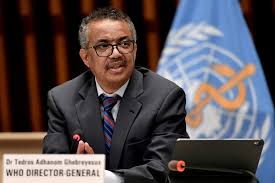
In 2025, WHO faced its most complex operating environment in decades. Yet its achievements – from disease elimination to global treaties – reveal an organisation adapting under pressure rather than retreating. The year demonstrated that global health progress is possible even amid crisis, but only through sustained solidarity, political courage and respect for science. As Director-General Dr Tedros Adhanom Ghebreyesus observed, the Pandemic Agreement was not just a policy milestone, but proof that cooperation remains humanity’s strongest defence. In an increasingly uncertain world, WHO’s 2025 record affirms that global health security is not a luxury – it is a shared responsibility.


