

By Mwanamkasi Jumbe
The government has moved to reassure the public that it has no intention of raising tax rates, stressing that future revenue growth will come from expanding the tax base and improving compliance, not increasing the burden on existing taxpayers.
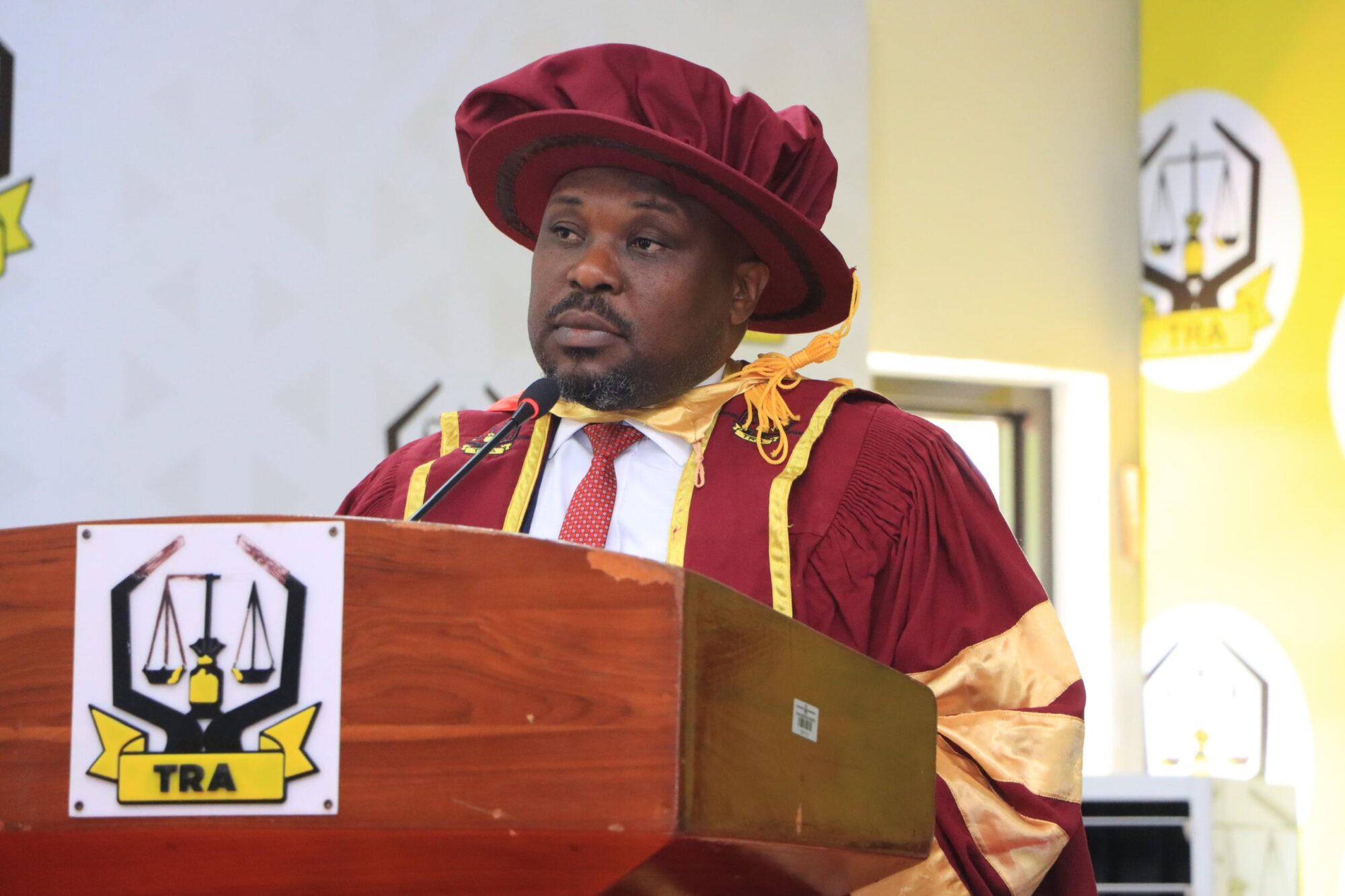
Deputy Permanent Secretary in the Ministry of Finance, Elijah Mwandumbya (pictured above), delivered the clarification during the 18th graduation ceremony of the Institute of Tax Administration (ITA), where 561 students were awarded certificates, diplomas, bachelor’s and master’s degrees.
Mr. Mwandumbya underscored the need for the public to appreciate that the government’s priority is to create a more enabling business environment and strengthen revenue collection systems, insisting that both goals are achievable without altering current tax rates.
He noted that effective governance relies on sound tax policies, efficient administration, and a revenue system capable of supporting Tanzania’s long-term aspirations – including Vision 2050.

“Our focus is to improve the business climate and enhance revenue systems – not increase tax rates,” he said.
Mr. Mwandumbya added that the government aims to build conditions that foster voluntary tax compliance, arguing that a peaceful and stable environment remains the foundation of economic activity. Without peace, he warned, business operations – and by extension tax collection – cannot flourish.
He further challenged ITA to develop research-based recommendations that will help the Tanzania Revenue Authority (TRA) identify new and emerging revenue sources, particularly as the economy becomes more digital.
The Deputy Permanent Secretary urged the institute to produce tax professionals capable of adopting global technologies such as artificial intelligence, which are reshaping tax systems worldwide. He assured graduates that the Ministry of Finance will continue to support ITA with the resources needed to strengthen its role as the country’s premier tax training institution.
“We have recorded an increase in revenue, driven largely by voluntary compliance. We must avoid over-regulation and excessive control,” he emphasised.
TRA Commissioner General, Yusufu Mwenda, reaffirmed the authority’s commitment to tax policies that promote enterprise growth, combat tax evasion, and improve service delivery.
He dismissed public speculation about possible tax hikes, insisting that widening the tax base – rather than raising rates – remains the government’s preferred approach to sustainable revenue mobilisation.
Mr. Mwenda also reiterated TRA’s intention to continue strengthening ITA so that it becomes a regional centre of excellence in tax and customs training.
ITA Rector, Prof. Isaya Jairo, highlighted the rapid digital transformation of tax and customs administration. He said today’s tax professionals must master both traditional systems and modern digital tools, including automated customs platforms, data analytics, digital compliance systems, and cybersecurity essentials. To meet these evolving demands, ITA is deepening its integration of technology into teaching, assessment, and institutional management, with the goal of producing graduates equipped with internationally competitive digital skills.


