


By Peter Nyanje
Tanzania enters 2026 with one of the strongest investment trajectories in East Africa, underpinned by policy reform, infrastructure expansion and a deliberate shift toward industrialisation and value addition.
Approved investment capital has nearly tripled in four years, rising from US$3.7 billion in 2021 to US$10.95 billion in 2025, while registered projects have more than tripled over the same period, according to recent data released by Tanzania Investment and Special Economic Zones Authority (TISEZA).
This momentum reflects a broader recalibration of the country’s growth model – from consumption-led expansion to production, processing and regional trade.
TISEZA, judging from the witnessed trends, has outlined ten sectors noing thatv they are set to define the country’s investment outlook in 2026, with manufacturing, infrastructure and energy emerging as the main anchors of long-term growth.
Manufacturing: the backbone of industrialisation
Manufacturing remains Tanzania’s most attractive investment destination and the clearest expression of the government’s industrialisation agenda.
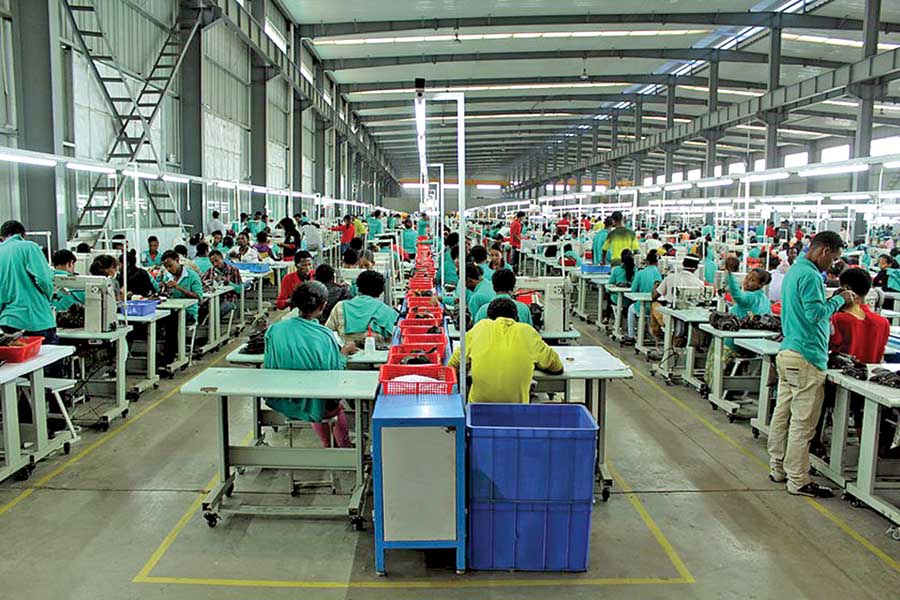
In 2025, the sector accounted for 417 projects, mobilising US$4.6 billion and creating nearly 62,000 jobs. Growth of about 5.9 percent is projected in 2026, driven by agro-processing, pharmaceuticals, construction materials, light assembly industries and mineral beneficiation.
Policy incentives – such as tax reliefs, industrial parks and Special Economic Zones – are increasingly aligned with import substitution and export-oriented production. As regional markets expand under the African Continental Free Trade Area (AfCFTA), Tanzania is positioning itself as a manufacturing base serving East and Southern Africa.
Commercial building and real estate: Jobs and urban demand
Commercial building has emerged as the largest job creator, reflecting rapid urbanisation and public-sector decentralisation. In 2025, the sector recorded 208 projects, generating more than 86,000 jobs and attracting US$2.9 billion in capital.
Demand is particularly strong in Dar es Salaam and Dodoma, where office parks, logistics hubs, malls and mixed-use developments are reshaping urban skylines.
The broader real estate market is projected to reach US$80.6 billion by 2029, supported by public-private partnerships, industrial warehousing linked to SEZs and rising demand for modern commercial space. Construction activity is forecast to grow at an average of 7.7 percent annually between 2026 and 2029, reinforcing the sector’s multiplier effect across the economy.
Agriculture: From subsistence to agribusiness
Agriculture remains central to Tanzania’s long-term development strategy as the government accelerates the transition from subsistence farming to commercial agribusiness. In 2025, the sector attracted roughly US$1 billion across 84 projects. Investment opportunities in 2026 are concentrated in agro-processing, storage, cold-chain logistics and agri-tech solutions.
The FY 2025/26 budget allocates TSh 1.243 trillion to agriculture, complemented by private capital mobilised through the Agro-Industrialisation Development Flagship programme. The Southern Agricultural Growth Corridor of Tanzania (SAGCOT) continues to anchor large-scale investment in horticulture, tea, coffee and oilseeds, linking farm productivity to industrial processing and export markets.
Transportation: Teinforcing regional hub ambitions
Transportation investment is accelerating as Tanzania consolidates its role as a regional logistics hub. With a TSh 2.746 trillion government allocation in FY 2025/26 and growing private-sector participation, the sector registered 135 projects worth around US$1 billion in 2025.
The Standard Gauge Railway is expected to become fully operational for cargo by 2026, significantly reducing transit times and costs for regional trade.
Investment opportunities span inland container depots, bonded warehouses, airport commercial facilities, expressways and aviation services, strengthening Tanzania’s connectivity to landlocked neighbours.
Tourism: Tecovery with diversification
Tourism investment is regaining momentum as Tanzania targets five million visitors and US$6 billion in annual tourism revenue. In 2025, the sector attracted US$927 million across 93 projects. Government funding of nearly TSh 360 billion in FY 2025/26 is supporting infrastructure upgrades, destination marketing and product diversification beyond traditional wildlife safaris.

Private investors are increasingly focusing on high-end lodges, conference facilities and low-impact concession models, aligning tourism growth with environmental sustainability and higher per-visitor spending.
Economic infrastructure: The enabling layer
Economic infrastructure underpins all high-growth sectors. In 2025, 25 projects worth US$731 million were approved, focusing on logistics, water systems, digital connectivity and industrial utilities. The national budget for FY 2025/26 exceeds TSh 56 trillion, with infrastructure delivery – often through PPP models – at its core.
These investments are gradually easing structural bottlenecks, improving energy reliability, transport efficiency and the overall cost of doing business.
Energy: Powering industrial growth
The energy sector is projected to grow by about 12 percent by 2026, driven by flagship public projects and expanding private participation. Capital approvals reached US$488 million across 13 projects in 2025.
The Julius Nyerere Hydropower Project is stabilising national supply, while off-grid solar, mini-grids and gas-to-power initiatives are expanding access, particularly in industrial zones.
Regulatory reforms aimed at cost-reflective tariffs and bankable power-purchase agreements are improving investor confidence in the sector.
Mining and petroleum: Malue addition and gas monetisation
Mining and petroleum investment is increasingly shaped by critical minerals and downstream processing. In 2025, the sector attracted US$306 million across 13 projects, with growing interest in nickel, graphite and rare earths alongside gold beneficiation.
On the petroleum side, the East African Crude Oil Pipeline is expected to reach completion in 2026, while preparatory work continues on Tanzania’s US$30 billion liquefied natural gas project, which could redefine the country’s energy and export profile over the next decade.
Telecommunications: The digital growth engine
Telecommunications is emerging as one of the fastest-growing sectors, with projected growth of 13.5 percent in 2026. Although approved capital stood at US$126 million in 2025, momentum is building through rural tower rollout, 5G expansion, data centres and cloud services.

Government-backed broadband programmes and private network modernisation are positioning telecoms as a foundation for digital services, fintech, e-commerce and smart manufacturing.
A diversified investment story
Taken together, these high-growth sectors illustrate a more diversified and resilient Tanzanian economy. The investment outlook for 2026 is no longer anchored in a single driver but in a broad ecosystem where infrastructure, industry, energy and services reinforce each other. For investors, Tanzania’s appeal increasingly lies not only in market size or resource endowment, but in its strategic ambition to become a production, logistics and value-addition hub for the wider East African region.


