


By Business Insider Reporter
Tanzania has strengthened its position as one of Africa’s leading conservation and sustainable tourism destinations, joining countries such as Namibia, South Africa, Uganda and Rwanda in demonstrating that protecting nature can go hand in hand with growing national revenues.
This recognition was underscored in December 2025 when Tanzania received three prestigious international accolades at the World Travel Awards, placing the country firmly among Africa’s sustainability champions. The awards not only celebrated Tanzania’s exceptional wildlife and landscapes but also highlighted the country’s deliberate shift towards eco-conscious tourism that supports conservation, communities and long-term economic growth.
Global recognition
At the World Travel Awards Grand Finals held in Bahrain last December, Tanzania was named World’s Leading Safari Destination 2025, outperforming established tourism heavyweights including Kenya, Botswana, Namibia and South Africa.
In another major win, Serengeti National Park was crowned World’s Leading National Park 2025, surpassing iconic global destinations such as South Africa’s Kruger National Park and the United States’ Yellowstone National Park.
For conservationists, the award affirmed Serengeti’s success in balancing tourism with ecosystem protection, particularly the management of the world-famous wildebeest migration.
These accolades come at a time when Tanzania is increasingly positioning conservation as the backbone of its tourism strategy.
Official data from the Bank of Tanzania (BoT) shows that tourist arrivals grew by 9.02 percent in 2025, reaching 2.09 million visitors, while tourism earnings hit a record US$4.2 billion.
This growth reflects not just rising numbers, but a shift towards higher-value, nature-based tourism that prioritises environmental sustainability.

Government investments in protected areas, improved park management, anti-poaching initiatives and community conservation programmes have helped restore wildlife populations and protect critical habitats. These efforts have reinforced Tanzania’s image as a destination where conservation is not an afterthought, but a national priority.
For communities living around national parks and game reserves, sustainable tourism has become an important source of income through employment, cultural tourism, conservation levies and benefit-sharing schemes.
Tanzania among africa’s sustainability pioneers
While Tanzania’s achievements stand out, the country is part of a broader African movement redefining tourism around conservation and sustainability.
Namibia, for example, has placed more than 40 per cent of its land under conservation through community conservancies, empowering local people to manage wildlife and benefit directly from tourism.
Botswana has adopted a “low-density, high-value” tourism model in the Okavango Delta, limiting visitor numbers to protect fragile ecosystems while generating premium returns.
Rwanda has built a global reputation around eco-conscious luxury tourism, particularly its mountain gorilla trekking programme, with strict conservation rules and revenue-sharing with local communities.
Uganda has expanded community-based conservation through regulated gorilla and chimpanzee trekking in Bwindi and Kibale forests, ensuring wildlife protection while supporting rural livelihoods.
By joining this group of sustainability leaders, Tanzania is reinforcing Africa’s growing reputation as a global hub for responsible tourism.
Protecting Nature for Future Generations
For Tanzania, sustainable tourism is inseparable from conservation. The country is home to some of the world’s most important ecosystems, including the Serengeti, Ngorongoro Conservation Area, Selous–Nyerere ecosystem, Mount Kilimanjaro and extensive marine parks along the Indian Ocean.
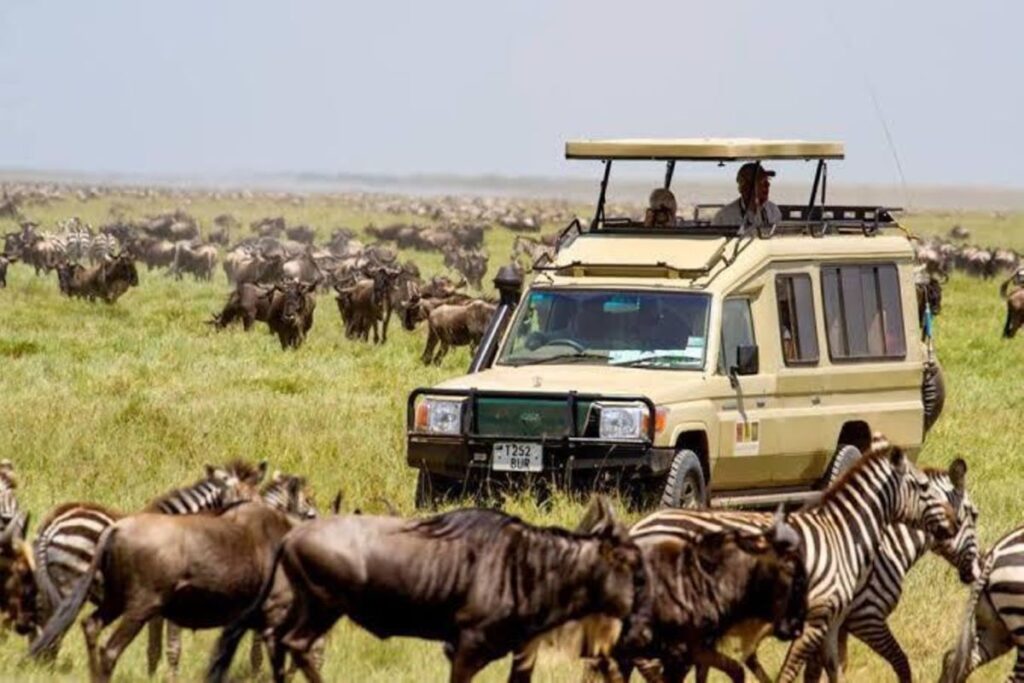
Climate change, habitat fragmentation and human-wildlife conflict remain serious challenges. However, conservation-led tourism provides resources to address these threats through better land-use planning, wildlife corridors, community engagement and environmental education.
Initiatives such as low-impact lodges, renewable energy use in parks, plastic reduction campaigns and digital monitoring of wildlife are increasingly shaping the sector.
A model for inclusive growth
Tanzania’s approach demonstrates that conservation can drive inclusive economic growth. By linking tourism revenue to environmental protection and community benefits, the country is reducing pressure on natural resources while expanding opportunities for Tanzanians – especially youth and women – in guiding, hospitality, conservation technology and cultural enterprises. As global travellers become more environmentally conscious, destinations that protect biodiversity and respect local communities are gaining a competitive advantage. Tanzania’s recent global recognition shows that sustainability is not only good for nature, but also smart economics.


