


By Business Insider Reporter
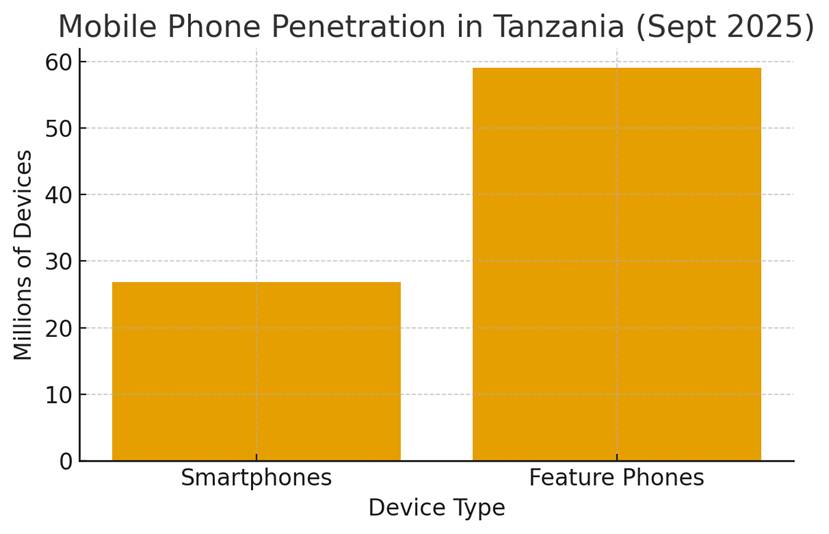
The number of smartphones in Tanzania surged to 26.9 million in the first nine months of the year – pushing the country’s smartphone penetration to a record 39.5 percent, according to the latest TCRA Communications Statistics Report for the Quarter Ending September 2025.
The new figures mark one of the strongest indicators yet of the country’s accelerating digital transformation – fueling everything from digital financial inclusion to e-government service uptake.
TCRA says the rapid growth in smartphone ownership is reshaping how Tanzanians communicate, transact, and access services.
The rise is also strengthening the foundation of the country’s digital economy, where mobile phones remain the primary gateway to the internet, digital payments, and online platforms.
“As of September 2025, the penetration of smartphones increased to 39.53 percent from 36.75 percent recorded in June 2025. Furthermore, penetration of feature phones also increased to 86.53 percent from 84.97 percent in June 2025,” the regulator notes in the report.
TCRA notes that user devices remain the single most important catalyst for the growth of telecommunication and ICT services in the country.
While smartphones are rising rapidly, the market is still dominated by feature phones, which numbered nearly 59 million by the end of September – highlighting both the scale of mobile connectivity and the untapped potential for deeper digital service adoption.
Industry analysts note that the smartphone surge is particularly significant for digital financial inclusion, with more Tanzanians now able to access mobile wallets, online banking, and fintech services that require smartphone functionality.
This comes at a time when mobile money continues to dominate domestic transactions, and digital payments are becoming central to business operations across sectors.
The latest data also reinforces broader digital adoption trends: internet penetration continues to expand, demand for data services is rising, and ICT usage – from e-commerce to e-learning – has deepened across both urban and rural communities.
Government agencies have likewise stepped up their shift to digital platforms, making smartphones essential for accessing services such as electronic tax filings, health information systems, licensing, and digital IDs.
Experts say the new smartphone penetration rate is not only a sign of progress but a strategic enabler of the country’s long-term vision for a competitive digital economy.
“With nearly 40 percent of the population now using smartphones, Tanzania is becoming more connected, more informed, and more financially included,” said a communications sector observer. “This momentum is critical for advancing the digital economy and achieving nationwide access to modern ICT services.”
As network coverage improves and smartphone prices continue to fall, digital inclusion advocates expect the numbers to grow even further. For policymakers and businesses, the expanding smartphone base offers a clearer pathway toward a future defined by digital services, cashless transactions, and a more technologically empowered population.


