

By Peter Nyanje
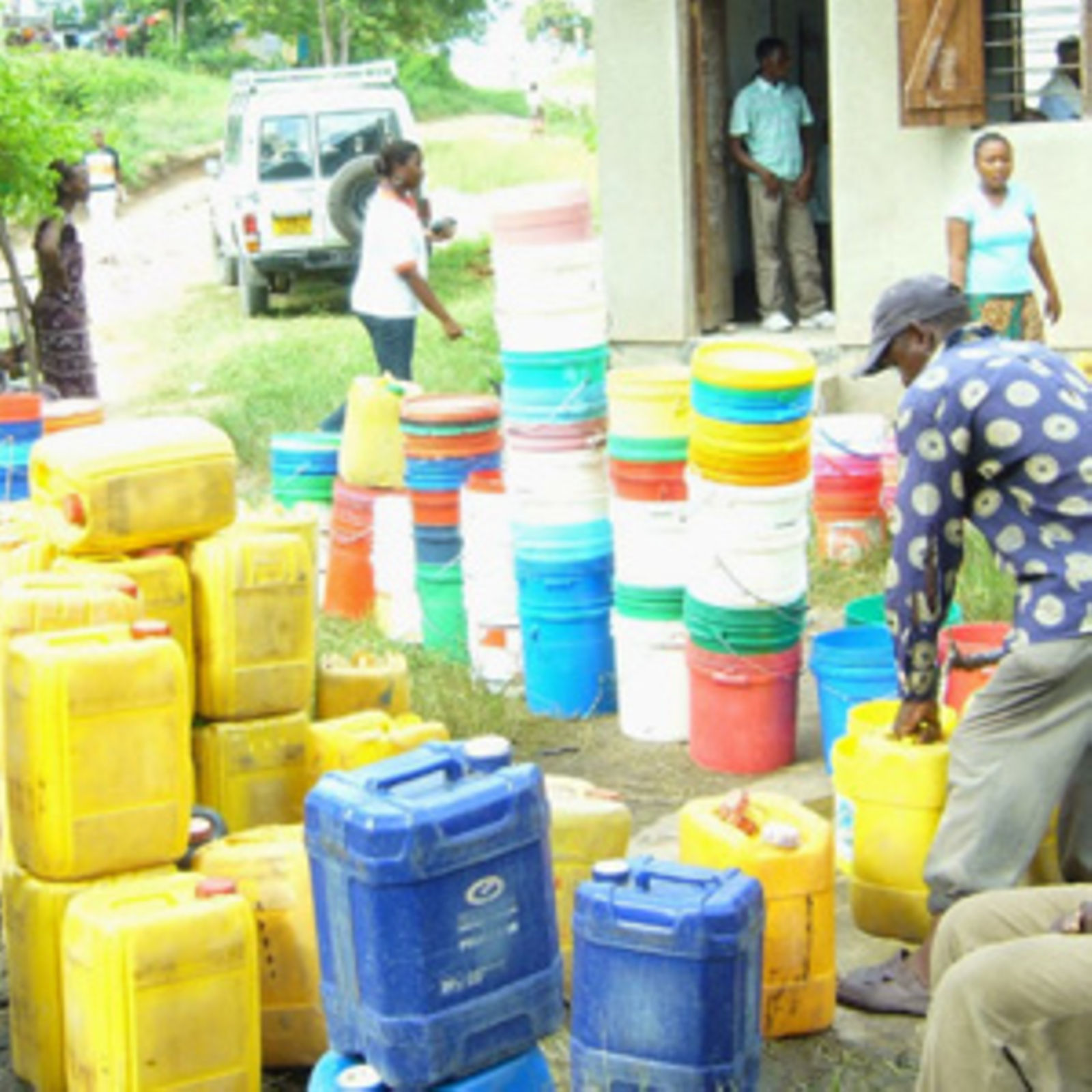
Residents of Dar es Salaam and its surrounding suburbs are facing one of the most severe water shortages in recent years, with access to clean and safe water falling far below demand. For a city whose population and economy continue to expand rapidly, the shortage has become not just an inconvenience but a growing public health and development concern.
The Dar es Salaam Water Supply and Sanitation Authority (DAWASA) has acknowledged that production at its main treatment plants, Upper Ruvu and Lower Ruvu, are operating far below installed capacity. These two facilities normally supply more than 90 percent of the city’s water, but declining water levels in the Ruvu River have sharply constrained output.
The Ruvu River, which originates in central Tanzania, has been severely affected by prolonged dry conditions following below-average rainfall during the last rainy season. The delayed and weak short rains, which usually begin in October, have further compounded the problem. As a result, DAWASA is currently producing about 270 million litres of water per day against a daily demand of 772 million litres. Even compared to its installed production capacity of 534 million litres per day, the authority faces a deficit of more than 260 million litres.

The situation is particularly acute at the Lower Ruvu plant, which typically produces 270 million litres per day but is currently generating only about 50 million litres. This sharp decline has left many households relying on water vendors, unsafe sources, or going without water altogether, raising concerns about sanitation and the potential outbreak of waterborne diseases.
In response, DAWASA has taken short-term mitigation measures, including the rehabilitation of boreholes across the city and the suspension of non-essential water abstraction permits in collaboration with the Wami–Ruvu Basin Water Board. While these steps have provided limited relief, they are not sufficient to meet the city’s growing needs.
In the medium term, authorities expect the completion of the Kidunda Dam in December 2026 to significantly stabilise water supply. However, experts caution that increasing climate variability could still limit the dam’s effectiveness during prolonged droughts. With a storage capacity of about 190 billion litres, Kidunda can sustain supply for only a few months under extreme dry conditions, similar to the drought that has already persisted for more than seven months.

Against this backdrop, attention is increasingly turning to a more durable solution: drawing water from the Rufiji River. DAWASA has already initiated plans to develop a large-scale water supply project from the Rufiji, one of Tanzania’s most water-rich river systems and home to the Julius Nyerere Hydropower Dam.
According to DAWASA, feasibility studies for the Rufiji water project are underway and are expected to be completed early next year. Preliminary designs indicate that the project could produce water volumes well in excess of Dar es Salaam’s current and future needs. Importantly, surplus water could also serve communities along the Dar es Salaam–Coast corridor.
Despite its transformative potential, the Rufiji water project is currently scheduled for completion by 2050, a timeline that many stakeholders view as misaligned with the urgency of the current crisis. With millions of residents already struggling to access water, calls are growing for the government and DAWASA to rethink the implementation schedule and explore phased or accelerated development.
Fast-tracking the Rufiji project could deliver multiple national benefits.
First, it would guarantee a reliable and sustainable water supply for Dar es Salaam and neighbouring regions, enabling DAWASA to connect more households to the piped network.
Second, wider access to clean water would support the government’s commitments to universal water coverage and improved public health outcomes.

Third, the project could form the backbone of a long-envisioned national water grid, allowing excess water from Rufiji to be distributed to other water-stressed regions. Fourth, assured water availability would support the rapid expansion of industrial parks in Dar es Salaam and Coast Region, many of which are already operational or under development, thereby boosting manufacturing output, employment and economic growth.
Crucially, the groundwork for the Rufiji project is already being laid. In parallel with DAWASA’s feasibility studies, the Rufiji Basin Water Board has been strengthening digital water resource monitoring systems. The Ministry of Water has rolled out satellite-based technologies to collect real-time data on rainfall, river flows and groundwater levels, enhancing water governance and planning.
As part of this effort, 46 monitoring stations are being installed across the Rufiji Basin to track surface and underground water resources. These systems are expected to significantly improve data accuracy and early warning capabilities, strengthening the sustainability of large-scale water investments. Taken together, these developments place Tanzania in a strong position to move decisively. By accelerating the Rufiji water project, the government would not only address Dar es Salaam’s immediate water crisis but also unlock long-term economic, industrial and social gains. With much of the preparatory work already underway, the opportunity now lies in bold policy decisions to turn Rufiji into the backbone of the nation’s water security.


