

By Business Insider Reporter, Tanga
The Ministry of Energy has used this year’s World Food Day celebrations as a platform to educate the public on clean cooking energy, demonstrating practical solutions that can reduce health risks, protect the environment and ease the burden of fuel costs for Tanzanian households.
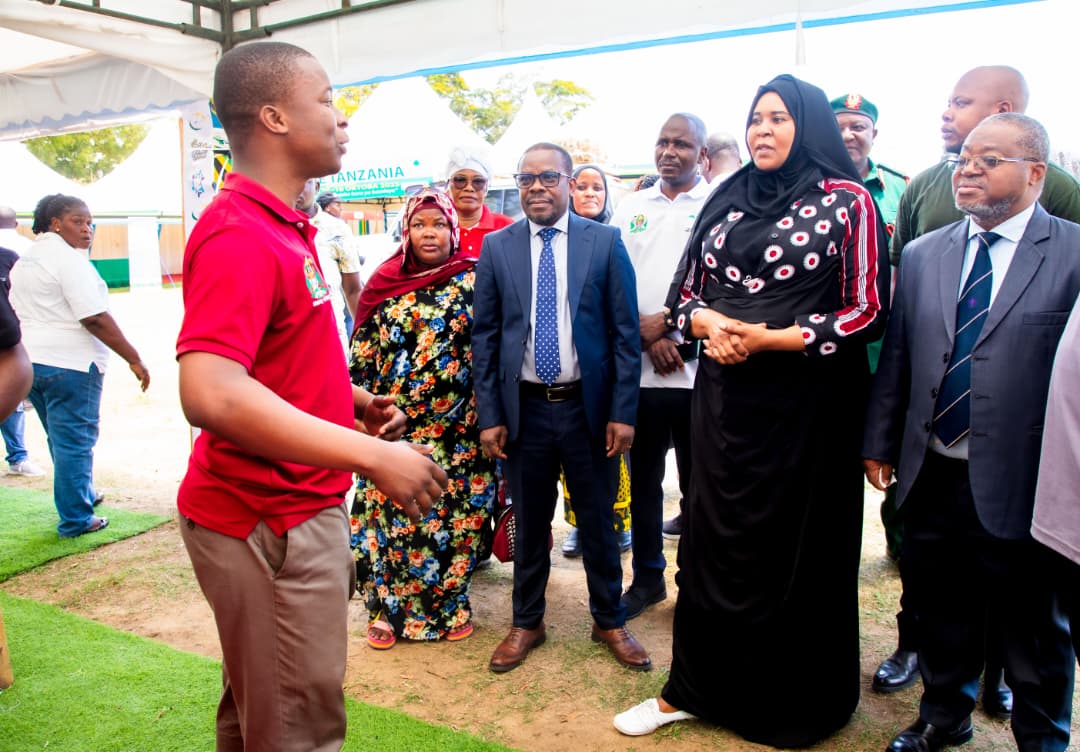
The event, held at the Usagara Grounds in Tanga, attracted hundreds of residents eager to learn about affordable and sustainable cooking alternatives. The exhibition runs until 16 October 2025, coinciding with global efforts to promote food security and sustainable energy use.
Regional Commissioner opens the event
Opening the celebrations, Tanga Regional Commissioner, Ambassador Dr. Batilda Burian, praised the Ministry of Energy and its agencies for taking part in the national commemoration and for using the occasion to educate citizens on clean energy solutions.
“Clean cooking energy has a direct link to food,” Dr. Burian said. “The government is encouraging households to move away from charcoal and firewood, which are not only harmful to health but also detrimental to our forests and climate.”
At the Ministry’s exhibition booth, Energy Specialist Omari Khalifa, explained that the Ministry, in collaboration with its institutions, is implementing Tanzania’s National Clean Cooking Agenda, a presidential initiative championed by Dr. Samia Suluhu Hassan.
As part of the campaign, the Rural Energy Agency (REA) is selling 6-kilogram gas stoves at a government-subsidised price of TSh 17,500 to residents of Tanga – nearly half the market cost.
Mr. Khalifa noted that around 500 gas cookers are being distributed during the event, underscoring the government’s determination to accelerate access to clean cooking energy and reduce dependence on biomass fuels.

“This initiative is part of the national goal to ensure that by 2034, at least 80 percent of Tanzanians are using clean cooking energy,” Mr. Khalifa said.
Clean cooking: A public priority
According to the World Health Organization (WHO), about 33 million Tanzanians – roughly 80 percent of the population – still rely on firewood, charcoal, or other polluting fuels for cooking.
This contributes to indoor air pollution, which remains a leading cause of respiratory illnesses, particularly among women and children.
Tanzania’s clean cooking agenda aligns with Sustainable Development Goal (SDG) 7, which calls for universal access to affordable, reliable, sustainable, and modern energy by 2030.
By promoting the use of liquefied petroleum gas (LPG) and other clean energy sources, the government aims to reduce pressure on forests, improve health outcomes, and support local businesses within the LPG supply chain.
Broader vision for energy transformation
The Ministry of Energy has prioritised energy transition as part of the national development agenda. The government’s subsidy on small gas cylinders is one of several interventions designed to make clean energy affordable for low- and middle-income households.
In recent years, Tanzania has also encouraged private investment in LPG distribution infrastructure, including storage facilities and refilling stations, to improve supply reliability and reach rural communities.

“Energy is not just about electricity; it’s about how we cook, how we live, and how we protect our environment,” Dr. Burian added. “By embracing clean cooking, we are ensuring a healthier and more sustainable future for every household.”
A step towards a greener, healthier future
As World Food Day 2025 emphasises “Water is Life, Water is Food – Leave No One Behind,” Tanzania’s clean cooking campaign reinforces the message that sustainable food systems begin with clean energy in every kitchen. The Ministry’s ongoing education drives – like the one in Tanga – are helping bridge the knowledge gap and bringing government policy closer to the people, one household at a time.


