
By Business Insider Reporter
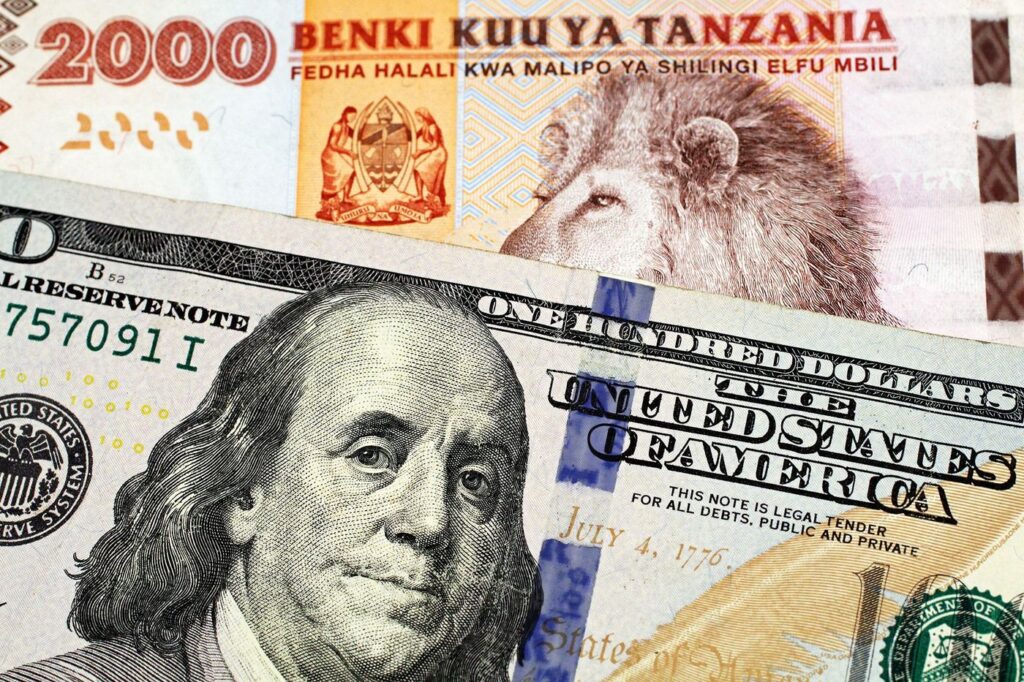
In 2024, the Tanzanian shilling suffered its worst fall in nearly a decade, plunging by nine percent against the US dollar – the steepest annual depreciation since 2016.
The impact quickly spilled into everyday life: from higher pump prices to rising costs of imported goods and essential commodities, squeezing household budgets and raising production expenses for businesses across the country.
Yet as 2025 draws to a close, a very different picture is emerging. The shilling has shown renewed resilience throughout the year, supported by improved foreign-exchange inflows, more disciplined import demand, and stronger supervision in the forex market.
Depreciation has slowed to a modest pace, inflation has remained contained within the Bank of Tanzania’s target range, and the country’s foreign-exchange reserves have strengthened enough to cover about four months of imports.
Together, these indicators suggest that the turbulence of 2024 is giving way to a more stable currency environment – one that offers relief to consumers, predictability for businesses, and renewed confidence in Tanzania’s broader macroeconomic direction.
2024: A rough ride
According to the latest annual assessments, including Deloitte Tanzania’s 2025/26 National Budget analysis, 2024’s depreciation was mostly driven by a combination of surging import demand and a yawning current-account deficit.
Imports outpaced exports, and demand for hard currency surged – pushing the shilling down sharply against the dollar. During the year, the country’s import bill stood at about US$16,788 million against export earnings of US$ 16,093 million.
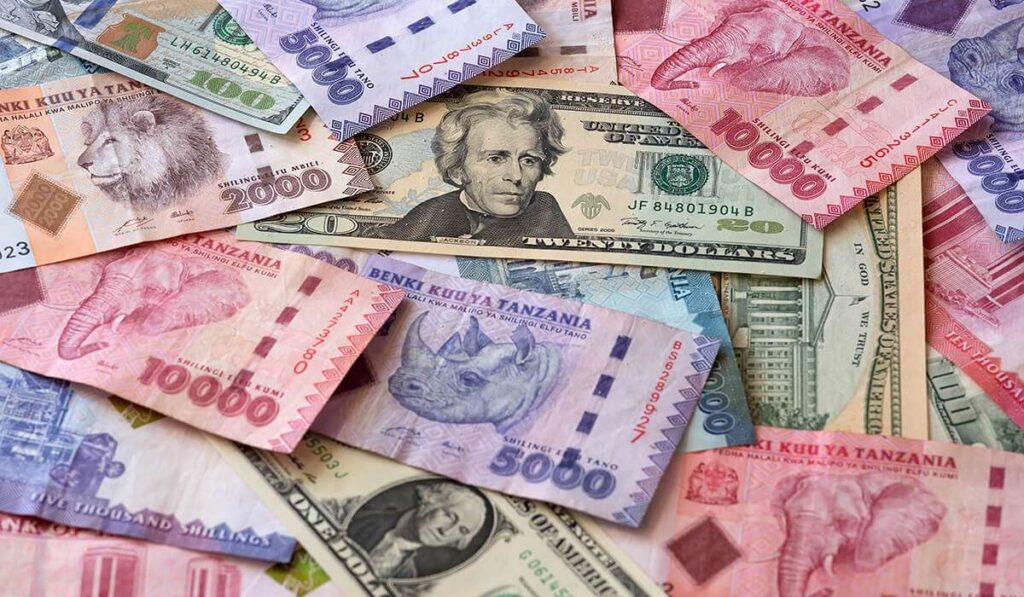
This depreciation rippled through the economy, particularly in prices of imported goods. Given Tanzania’s reliance on imports (especially oil), the weak shilling added inflationary pressure, threatening to erode purchasing power.
2025: A measured rebound
But 2025 tells a different story. The shilling is now expected to depreciate much more gently – at around 3.7 percent – underpinned by a projected current account deficit of 3.2 percent of GDP and stable forex reserves covering roughly four months of imports.
This improved outlook reflects several factors: renewed foreign-exchange inflows from exports (including gold and cash crops), tourism revenues, and weaker global commodity prices that have eased pressure on import bills.
“Export of goods and services rose to US$ 17,094.2 million in the year ending September 2025, from US$ 14,896.3 million in the same period in 2024,” the Bank of Tanzania (BoT) notes in the latest Monthly Economic Review (MER).
“The growth was largely driven by increased service receipts and stronger performance in the export of gold, manufactured goods, and traditional exports, particularly cashew nuts and tobacco,’ add the central bank in the October 2025 MER.
The gold and tourism factors
The country’s key foreign exchange earners continued to bolster the country’s reserves in 2025. Gold exports surged by 35.8 percent, reaching US$ 4,431.2 million in the year ending September, up from US$ 3,263.9 million in the previous year, driven largely by elevated global gold prices.
Strong export earnings have helped support the Tanzanian shilling, contributing to its relative stability against the US dollar in 2025.
Tourism, another critical source of foreign currency, also showed resilience. For the year ending September 2025, tourism earnings rose to US$ 3,885.2 million, up from US$ 3,792.1 million in the same period in 2024.
The combined effect of higher earnings from gold and tourism has provided a steady inflow of dollars, helping to mitigate pressures on the shilling and maintain a more stable exchange rate compared to the sharp depreciation seen in 2024.
Modest gains expected through 2029
After averaging TSh 2,614.55 per US dollar in 2024, the Tanzanian shilling has shown signs of stabilization in 2025. BoT figures indicate that, up to October, the currency averaged TSh 2,571.71 per dollar, reflecting a modest strengthening compared to last year.
Looking ahead, Deloitte Tanzania forecasts the shilling to trade at around TSh 2,695 in 2025 and TSh 2,763 in 2026, with a gradual rise to TSh 2,812 by 2027, TSh 2,835 in 2028, and TSh 2,866 in 2029.
Analysts attribute the projected stability to prudent monetary policy, controlled inflation, and managed foreign exchange reserves, signaling cautious optimism for the currency in the medium term.
| Year | Forecasted Avg. Exchange Rate (TSh per US$) |
| 2025 | 2,695 |
| 2026 | 2,763 |
| 2027 | 2,812 |
| 2028 | 2,835 |
| 2029 | 2,866 |
Source: Deloitte Tanzania
What It Means for Tanzanians
For consumers and businesses, a more stable shilling offers breathing space: fewer exchange-rate shocks, more predictable import costs, and slower price acceleration. For import-dependent sectors (fuel, manufacturing, retail), manageable exchange rates ease planning and reduce cost pass-through.
For investors and creditors – including local banks and foreign partners – the improved macro-balance and stable monetary policy boost confidence.
And for policymakers, it underscores the value of sound external management: export diversification, reserve buffers, and judicious use of monetary tools.
The road ahead: Still some caution
A stable 2025 doesn’t erase 2024’s scars. The accumulated vulnerabilities – external deficits, dependency on imports, sensitivity to global commodity swings – remain. Should external conditions deteriorate (global oil price spikes, weak export performance, volatile capital flows), the shilling could again come under pressure.
Still, with reserves holding firm and BoT’s steady hand on policy levers, the nation may have averted a currency crisis. 2025 could mark a turning point – from sharp depreciation to relative stability. For Tanzania, that stability matters – not just symbolically, but in every shop-shelf price, every contract for imports, and every loan denominated in foreign currency.
The Shilling Against the US Dollar in 2025
| Month | Approx. Avg. Rate (1 USD → TZS) |
| January | 2,511.06 |
| February | 2,584.97 |
| March | 2,638.10 |
| April | 2,682.17 |
| May | 2,695.60 |
| June | 2,638.42 |
| July | 2,604.13 |
| August | 2,518.17 |
| September | 2,473.47 |
| October | 2,462.00 |
| November* | 2,449.51 (as of 20 Nov) |