

By Business Insider Correspondent, Shinyanga
The government, through the Ministry of Energy, has expressed satisfaction with the rapid progress of the national solar power generation project in Kishapu District, Shinyanga Region, which has now reached 80.4 percent completion.
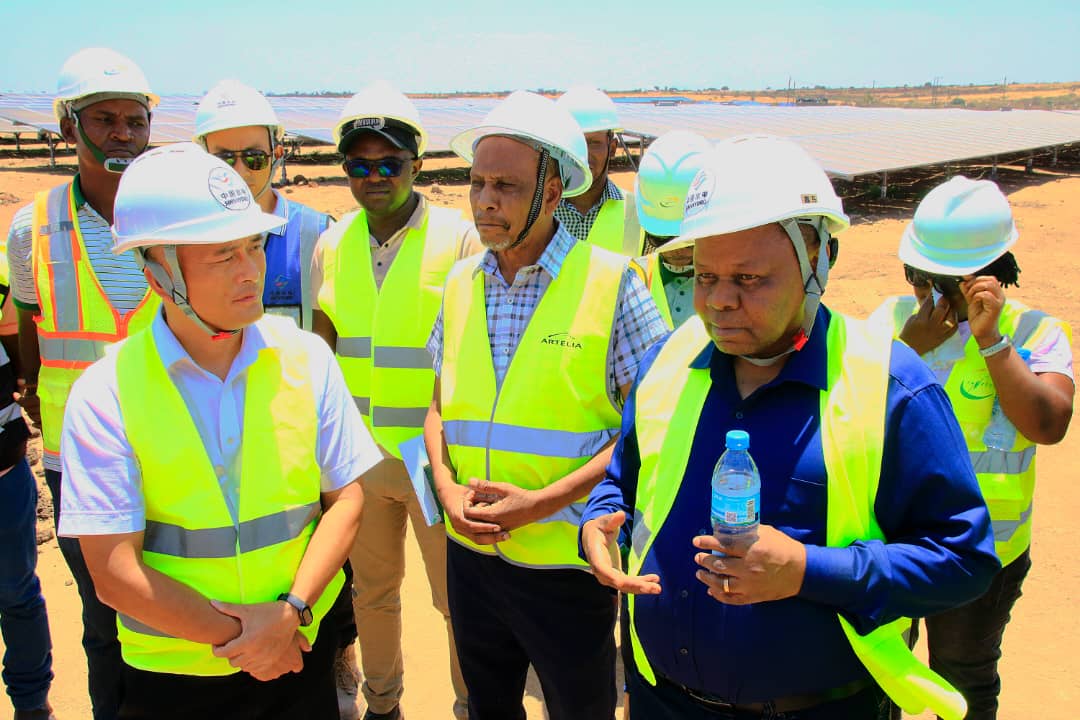
After inspecting the project’s progress, the Permanent Secretary in the Ministry of Energy, Engineer Felchesmi Mramba, said the government is pleased with the contractor’s performance, describing the project as a key part of Tanzania’s national and global goals to expand access to sustainable energy.
Engineer Mramba noted that the 150-megawatt Kishapu Solar Power Project is being implemented in two phases at a total cost of TSh 323 billion. The first phase, which will generate 50 megawatts, is scheduled for completion by December 2025, with Sinohydro Company from China serving as the main contractor.
“This project is part of the government’s broader efforts, under the leadership of Her Excellency Dr. Samia Suluhu Hassan, President of the United Republic of Tanzania, to ensure that all citizens have access to clean, safe, and affordable energy,” noted Eng. Mramba
He added that once completed, the Kishapu Solar Power Plant will significantly improve electricity reliability in both urban and rural areas, while reducing dependence on non-renewable and environmentally harmful energy sources.

On his part, Project Supervisor, Engineer Emmanuel Anderson, said construction progress is on schedule and that the project is expected to be completed within the stipulated timeframe.
Meanwhile, Sinohydro Project Manager, Engineer Daniel Xu, reaffirmed the company’s commitment to completing the project to high standards and within the agreed timeline.
“We have increased manpower and resources to ensure timely delivery. We appreciate the excellent cooperation from the government and the people of Kishapu, and we pledge to complete this project with the quality it deserves,” said Eng. Xu Once operational, the Kishapu Solar Power Project will boost Tanzania’s renewable energy generation capacity, enhance reliable electricity supply for institutions, industries, and households, and drive socio-economic growth across Shinyanga Region and the nation at large.


