

By Business Insider Reporter
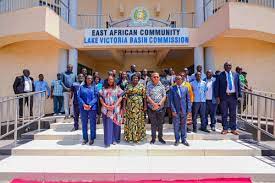
The East African Community (EAC) has inaugurated the new headquarters of the Lake Victoria Basin Commission (LVBC) in Kisumu – an investment that marks a turning point in how the region manages one of Africa’s most economically and ecologically critical freshwater resources.
The US$ 3.54 million facility – funded by EAC partner states – arrives at a time when Lake Victoria faces intensifying pressures: rapid population growth, climate variability, degraded water quality, and fisheries under strain. More than 40 million people across Kenya, Tanzania, Uganda, Rwanda and Burundi depend directly on the basin for livelihoods ranging from fishing and marine transport to agriculture, tourism and urban water supply.
For business leaders and investors, the new headquarters represents more than administrative consolidation. It is a structural intervention aimed at stabilising a resource that underpins East Africa’s economic future. The basin hosts a fisheries sector worth hundreds of millions of dollars annually, sustains emerging blue-economy corridors, and supports cross-border transport networks now central to regional trade.
Kenya’s Cabinet Secretary for EAC and Regional Affairs, Beatrice Askul, described the institution as a “nerve centre” for scientific decision-making and coordinated environmental regulation – areas long hampered by fragmented national policies and slow data-sharing. The facility is expected to strengthen oversight of cross-border fisheries, harmonise pollution standards, and accelerate responses to recurring ecological threats such as harmful algal blooms in the Winam Gulf.
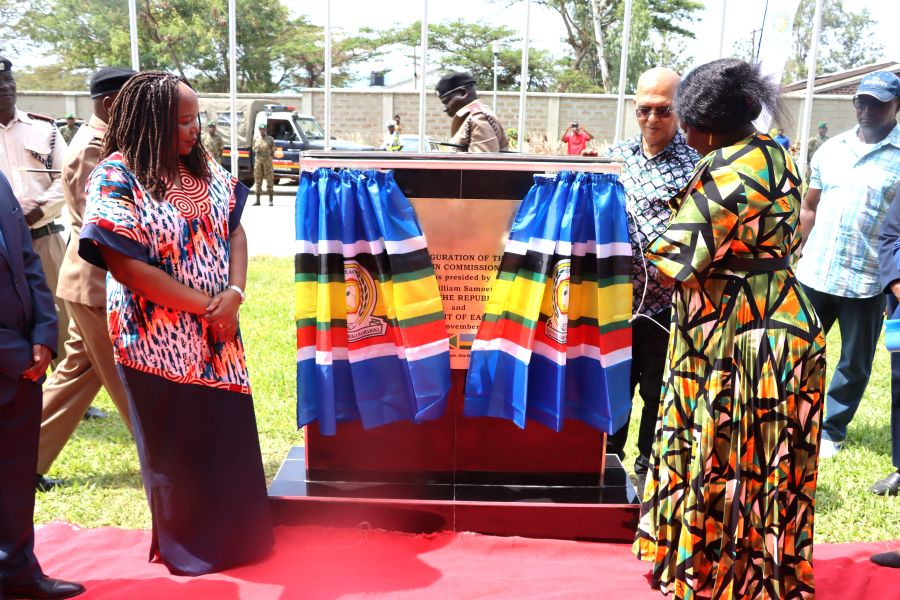
EAC Secretary General Veronica Nduva said the headquarters would operate as both an administrative hub and a regional think-tank. Equipped with research, data management and policy coordination spaces, it is designed to support integrated basin management – something previous donor-driven projects struggled to achieve without a permanent institution linking them together.
The building itself is the culmination of a project that began in 2008, with construction starting in 2020 before pandemic-related delays. Backed over the years by development partners including the World Bank, GIZ, KfW, UNESCO, the EU and AfDB, the new HQ now provides the architecture needed to unify decades of fragmented environmental initiatives.
For riparian counties and cities – Kisumu, Mwanza, Bukoba, Entebbe – the facility is expected to support major economic transitions. These include Kenya’s investments in modern fisheries infrastructure and revived lake transport routes, Tanzania’s expansion of Mwanza’s marine logistics capacity, and Uganda’s fisheries reform programme targeting depleted stocks.
What is at stake is the long-term resilience of a lake that serves as a regional growth engine. Declining water quality threatens urban supply systems, illegal fishing undermines export revenues, and climate disruptions increasingly affect agriculture and maritime transport. A stronger LVBC is seen as essential to stabilising these systems and guiding policy decisions with up-to-date scientific evidence.
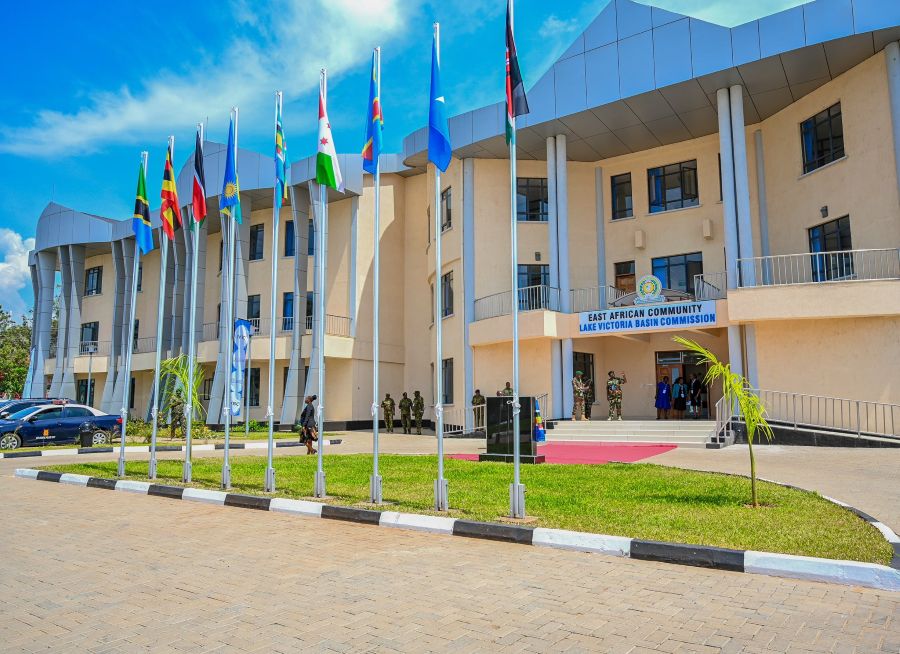
For East Africa’s business community, the headquarters signals a shift toward predictable, coordinated environmental governance – an important foundation for investment in the blue economy, water infrastructure, fisheries processing, shipping and climate-resilient agriculture.
The new LVBC headquarters is ultimately a statement: that safeguarding Lake Victoria is inseparable from the region’s economic ambitions. Its success will depend on the quality of data it generates, the urgency with which governments act on shared threats, and the Commission’s ability to enforce policies across borders. In a region where political cycles often outpace institutional development, the facility stands as a rare long-term investment in the machinery of sustainability – one that may determine the economic trajectory of East Africa’s most strategic natural asset.


