


By Business Insight Reporter
Tanzania is poised to reap significant gains from the African Development Bank’s (AfDB) expanded financing capacity following the African Development Fund’s (ADF) record US$11 billion replenishment to be spent in the next three years
The landmark capital raise strengthens the AfDB Group’s ability to scale up concessional financing for low-income countries, placing Tanzania – one of the ADF’s largest and longest-standing beneficiaries – at the forefront of the next phase of Africa’s development investment.
At a time when global development finance is under mounting pressure, the largest mobilisation in the Fund’s 53-year history represents more than a numerical milestone.
It signals renewed confidence in Africa’s growth prospects and equips the AfDB with the resources needed to deepen investments in infrastructure, energy, agriculture, climate resilience and social services.
For Tanzania, the funding momentum comes as the country accelerates its long-term ambition to transform into a diversified, middle-income economy anchored by industrialisation, trade expansion and human capital development under the Dira 2050 blueprint.
Against this backdrop, the AfDB has consolidated its position as one of Tanzania’s most important multilateral development partners, committing billions of dollars over the past decade to support growth-enhancing and resilience-building investments across the economy.
A development partnership built on scale and continuity
AfDB’s engagement in Tanzania spans decades, underpinned by a financing model that blends sovereign loans, concessional ADF resources, grants and private-sector instruments. This diversified approach has allowed the Bank to respond flexibly to Tanzania’s evolving development priorities while maintaining a long-term focus on inclusive and sustainable growth.

As of mid-2023, AfDB’s active portfolio in Tanzania comprised 25 operations valued at about US$2.75 billion, spanning transport, energy, water, agriculture, finance and social sectors. With additional approvals, guarantees and private-sector commitments in 2024 and 2025, total financing has since risen to about US$3.4–3.5 billion, reflecting an expanding pipeline of development investments.
These interventions are guided by the Bank’s Country Strategy Paper (CSP 2021–2025), which aligns closely with Tanzania’s national development plans and prioritises six core areas:
- transport and logistics infrastructure;
- energy generation and regional interconnections;
- water and sanitation;
- agriculture and agro-industrial development;
- private sector development and financial inclusion; and
- climate adaptation and resilience.
Infrastructure as the backbone of transformation
Infrastructure remains the anchor of AfDB financing in Tanzania, reflecting its central role in unlocking productivity, lowering the cost of doing business and strengthening regional integration.
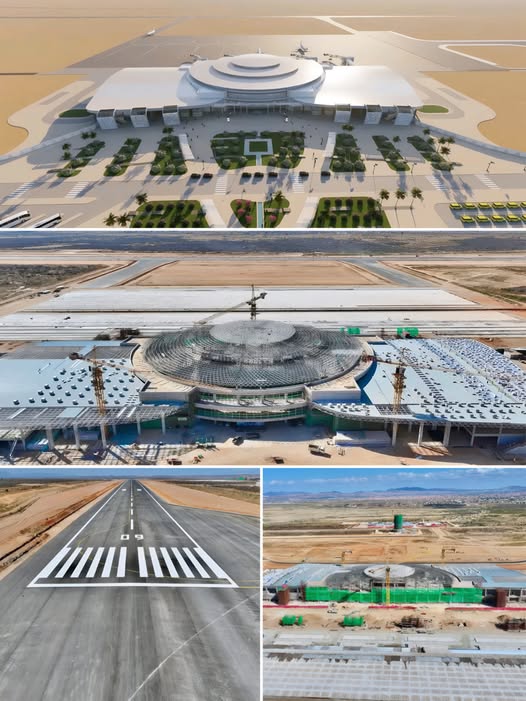
Over the years, the Bank has financed major road corridors, transmission lines, airports and cross-border connectivity projects designed to improve market access and reinforce Tanzania’s position as a regional trade and logistics hub.
Transport investments, in particular, have been instrumental in linking agricultural production zones to domestic and export markets, reducing logistics costs and supporting cross-border trade within East and Southern Africa. Improved connectivity has also enhanced Tanzania’s role as a gateway economy for landlocked neighbours, deepening its strategic relevance in regional value chains.

In 2025, AfDB reaffirmed its long-term infrastructure commitment by signalling multi-billion-dollar programmatic support for priority transport and logistics investments, including roads, airports and regional corridors. These initiatives are expected to unlock trade flows, support agricultural exports and facilitate industrial growth, while laying the foundation for sustained private-sector participation.
Powering growth through energy investment
Energy has emerged as another cornerstone of AfDB support to Tanzania. Through concessional financing and blended finance structures, the Bank has backed renewable energy projects – particularly hydropower investments – aimed at expanding generation capacity, improving grid stability and strengthening energy security.
Reliable and affordable power is critical to Tanzania’s industrialisation agenda, SME development and household welfare. By addressing supply constraints and transmission bottlenecks, AfDB-supported energy projects are enabling the expansion of manufacturing, services and agro-processing activities while broadening access to electricity across urban and rural communities.
The emphasis on renewable energy also aligns with Tanzania’s climate commitments, reinforcing a transition towards a more sustainable and resilient energy mix.
Catalysing private sector growth and trade finance
In line with AfDB’s Industrialise Africa High 5 priority, the Bank has scaled up private-sector interventions in Tanzania, particularly through trade-finance guarantees and credit lines aimed at supporting small and medium-sized enterprises (SMEs).
Recent approvals highlight this focus. A US$7.5 million trade-finance guarantee facility for Bank of Africa Tanzania is enabling increased import and export financing for local businesses, while a US$10 million guarantee for Exim Bank Tanzania is strengthening access to international trade lines and easing liquidity constraints for corporates and SMEs.
These instruments reduce risk for local banks, crowd in private capital and help Tanzanian firms integrate more effectively into regional and global markets. Beyond supporting enterprise growth, the facilities directly contribute to job creation and income generation – key objectives of Tanzania’s development strategy.
Agriculture and agro-industry: moving beyond subsistence
Agriculture remains a cornerstone of Tanzania’s economy, employing a large share of the population and underpinning food security. AfDB financing in the sector has increasingly focused on moving the economy up the value chain—from subsistence production to market-oriented, value-added agro-industrial activity.
Over the years, ADF resources have supported irrigation schemes, rural roads, fertiliser access and market linkages, helping to raise productivity and incomes for smallholder farmers. In 2025, the Bank approved US$24 million in financing to support private-sector-led agro-industrial development, complementing earlier public-sector investments.
The strategy aligns with Tanzania’s ambition to strengthen agro-processing, increase export earnings and create decent employment, particularly for youth and women. By integrating farmers into structured value chains, AfDB-supported projects are helping to stabilise incomes and enhance resilience to climate and market shocks.
Climate resilience and water security
As climate risks intensify, AfDB has expanded its grant-based financing for climate adaptation and resilience in Tanzania.
A notable example is the US$9.38 million ADF grant approved for climate resilience and water security in the Mkondoa Catchment, aimed at reducing flood and drought risks while protecting livelihoods and critical infrastructure.
Such interventions reflect a broader shift towards climate-smart development, recognising that long-term growth depends on safeguarding natural resources, strengthening water systems and building resilience into infrastructure and livelihoods.
Investing in health and human capital
AfDB’s engagement in Tanzania has also extended into high-impact social infrastructure. In late 2024, the Bank approved US$75 million to support the establishment of a cardiovascular and specialised medical hub – an investment expected to strengthen tertiary healthcare services, reduce costly medical referrals abroad and position Tanzania as a regional centre for specialised treatment.
The project underscores AfDB’s growing focus on human capital development, recognising that health outcomes are closely linked to productivity, resilience and long-term economic performance.
Tanzania as a leading ADF beneficiary
Tanzania’s status as one of the largest recipients of AfDB’s concessional financing through the ADF places it in a strong position to benefit from the Fund’s record US$11 billion replenishment.
The historic mobilisation ensures sustained concessional resources for priority projects in low-income countries, enabling Tanzania to advance its development agenda while maintaining debt sustainability.
Speaking during recent project signings, AfDB Tanzania Country Manager Dr Patricia Laverley emphasised that the Bank’s approach goes beyond financing alone.
“Our focus is on delivering transformative projects that unlock private investment, strengthen institutions and directly improve the quality of life for Tanzanians,” she said, pointing to the growing role of trade finance, climate resilience and private-sector development.
A catalytic partner for the next growth phase
With a diversified and expanding portfolio, AfDB’s financing continues to play a catalytic role in shaping Tanzania’s development trajectory. From roads and power lines to banks, farms, hospitals and climate-resilient catchments, the Bank’s investments are strengthening both the physical and economic foundations of growth. As the AfDB leverages its enhanced financing capacity following the record ADF replenishment, Tanzania stands out as a country well positioned to translate concessional funding into long-term economic transformation—reinforcing its status as one of the Bank’s most strategic partner countries in East Africa.


