

By Business Insider Reporter
Tanzania’s ambition to dramatically scale up power generation has taken another decisive step forward, with the Kishapu solar power project in Shinyanga emerging as a flagship example of the country’s renewable-energy drive.
As implementation reaches 84 per cent, government officials say the project reflects President Samia Suluhu Hassan’s push to boost national generation capacity to 8,000MW by 2030 – a transformative leap that would reshape Tanzania’s industrial and economic landscape.
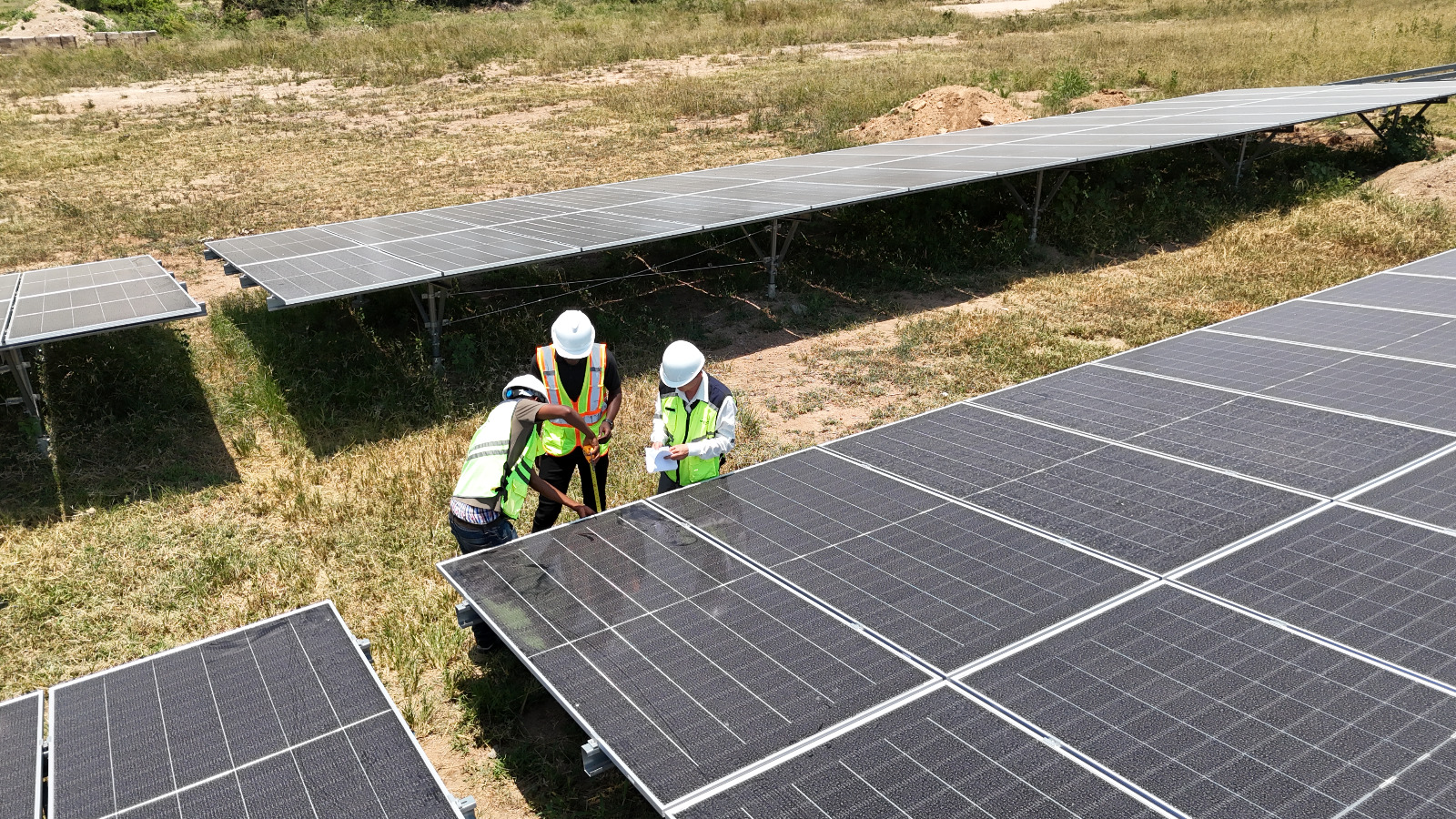
During a project inspection on November 28, 2025, Kishapu District Commissioner, Peter Masindi, described the solar plant as a “symbol of Tanzania’s rising generation capacity”, noting its strategic importance not only for the Lake Zone but for neighbouring regions as well.
“This project is a lifeline for the people of Kishapu. Residents have embraced it fully, they understand its value, and they have taken responsibility in safeguarding the infrastructure,” said Masindi.
More than 1,200 residents previously occupying or using land within the project area have already received compensation, easing implementation and ensuring community support – a key factor in the rapid progress to date.

A 100-day flagship under presidential directive
Accompanying the District Commissioner was the Managing Director of Tanesco, Lazaro Twange, who underscored the project’s national significance. He noted that President Samia Suluhu Hassan instructed the plant to be among several strategic energy projects completed within her first 100 days following her swearing-in, underscoring its centrality to her administration’s energy expansion agenda.
The government has injected approximately TSh118 billion into the Kishapu solar farm, making it one of Tanzania’s most substantial renewable-energy investments in recent years.
“We are very grateful to Her Excellency the President for allocating nearly TSh118 billion to this project. Our duty now is to deliver it on time,” said Twange.
He issued strict instructions to the contractor to ensure the project is completed by January 15, 2026, stating unequivocally that no extension will be granted. Any deviation, he warned, would attract legal consequences.
Solar power as a strategic pillar of energy reliability
Twange emphasised that Tanzania currently generates over 4,000MW from various energy sources, including hydropower, natural gas, and emerging solar and wind projects. Expanding generation nodes such as Kishapu, he said, is crucial to simplifying distribution and ensuring reliable access for both households and investors.
“As we add more generation stations, we improve the ease and stability of power distribution nationwide. This is aligned with the President’s determination to expand electricity access and support industrial growth,” Twange said.
The Kishapu project forms part of a broader cluster of priority energy initiatives across the Lake Zone, where Tanesco is inspecting ongoing works in Shinyanga, Mara, Geita and Kagera.
The rapid progress of the solar plant, already at 84 per cent completion, positions it among the frontrunners in Tanzania’s renewable-energy rollout.
Tanzania’s renewable-energy shift accelerates
Tanzania’s energy strategy in recent years has placed increasing emphasis on balancing large hydropower projects – such as the Julius Nyerere Hydropower Plant – with renewable sources like solar and wind to build a diversified, climate-resilient power mix.
The country enjoys some of the highest solar irradiation levels in East Africa, making large-scale solar generation not only technically feasible but highly cost-effective. Projects such as Kishapu are therefore expected to play a long-term role in stabilising the national grid and reducing reliance on expensive fossil-fuel generation.

For investors and industry analysts, the Kishapu development signals a maturing energy market increasingly open to innovation, public–private partnerships, and renewable-energy financing.
As Twange and his team continue their inspection tour of the Lake Zone, the message is clear: Tanzania’s power sector is entering a new phase of expansion, with solar energy firmly in the spotlight. And with the Kishapu project racing toward commissioning in early 2026, Tanzania’s journey to becoming a regional energy powerhouse is gathering unmistakable momentum.


