

By Business Insider Reporter
A new era of digital and economic integration is dawning for East and Central Africa as Tanzania and the Democratic Republic of the Congo (DRC) move forward with plans to interconnect through a fiber optic link beneath Lake Tanganyika.
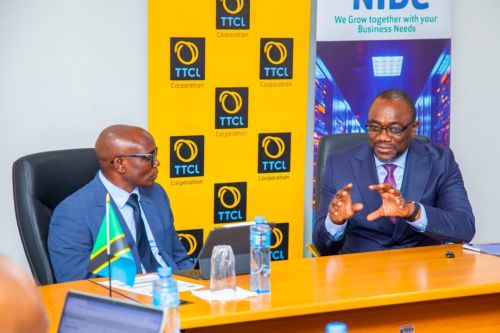
The project, discussed this week at Tanzania Telecommunications Corporation (TTCL) headquarters in Dar es Salaam, will extend Tanzania’s National ICT Broadband Backbone (NICTBB) from Kigoma to Kalemie in the DRC.
Once complete, it will provide a direct, high-speed digital corridor linking the Great Lakes region to the Indian Ocean – a development set to transform communication, trade, and business between the two countries.
A new artery for regional connectivity
The under-lake fiber optic cable – stretching approximately 186 kilometres – will use advanced G.652D single-mode technology capable of handling up to 100 Gbps, expandable into terabit capacity.
The project will overcome the lake’s challenges, including depths of up to 1,470 metres, through specialised burial techniques and environmental protection measures in compliance with the Ramsar Convention.
“This strategic project is expected to significantly boost digital transformation in the DRC and strengthen Tanzania’s position as East Africa’s digital gateway,” said TTCL Director General Moremi Marwa during the talks.
Currently, Tanzania’s NICTBB – spanning more than 7,900 kilometres – connects six countries: Zambia, Malawi, Kenya, Uganda, Rwanda, and Burundi. The extension into DRC marks the final missing link in the Pan-African Infrastructure Development Agency’s (PIDA) plan to integrate Great Lakes nations through resilient digital infrastructure.
Driving trade, lowering costs
The project is more than just a communications milestone – it’s a trade enabler. Eastern DRC, home to a US$10 billion mining sector, has long suffered from high data costs and unreliable satellite connections. Once operational, the new link will cut bandwidth costs by up to 50 percent, enabling mining firms to deploy real-time data analytics, automate operations, and improve logistics efficiency.
Beyond mining, the link will also empower small and medium enterprises (SMEs) across both countries. Faster internet and lower data costs will make it easier for Tanzanian and Congolese businesses to engage in cross-border e-commerce, digital banking, and logistics coordination. Experts estimate that the project could add US$1–2 billion in regional trade value over the next decade.
For Tanzania, the deal represents an economic opportunity as well. By leasing bandwidth capacity to the DRC and other neighbouring countries, the country is set to generate new foreign exchange earnings while strengthening its role as a regional digital hub.
Digital transformation and regional integration
The project’s timing aligns with Tanzania’s broader Digital Tanzania Programme and the DRC’s National Digital Development Plan, both aimed at accelerating broadband penetration and economic inclusion.
“Digital infrastructure is the backbone of modern trade,” said Eng. Leo Magomba, Director of ICT Infrastructure at Tanzania’s Ministry of Communication and Information Technology. “By connecting with DRC, we are not just linking two countries – we are linking economies, businesses, and communities.”
On the DRC side, Société Congolaise des Postes et Télécommunications (SCPT) and SOCOF Director General Prosper Ghislain emphasized that the fiber connection will be crucial in expanding connectivity to remote provinces, improving education, health services, and financial inclusion.
From vision to reality
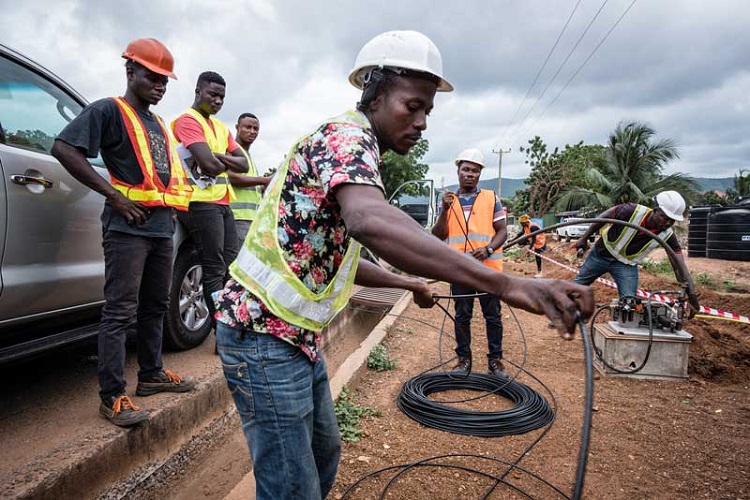
Backed by AUDA–NEPAD under PIDA’s 2021–2030 Action Plan, the fiber link has already passed its environmental and technical feasibility assessments. Construction is expected to begin in early 2026, with operations scheduled for late 2027.
The US$15–20 million project will be financed through a public–private partnership (PPP) model, involving technical collaboration with Mauritius-based Bandwidth and Cloud Services Group. Both governments have agreed to conduct quarterly progress reviews to ensure timely delivery and efficient funding.
The bigger picture
Once completed, the Tanzania–DRC link will cement the Great Lakes region as one of Africa’s most connected economic corridors – bridging the Indian and Atlantic Oceans through digital infrastructure.
For businesses, it will mean faster communication, lower operational costs, and greater market access. For citizens, it will deliver more reliable internet, digital inclusion, and new opportunities in education, e-commerce, and innovation. As Africa moves toward a unified digital market, this under-lake fiber project could very well become the lifeline of East and Central Africa’s economic future – a symbol of how technology can bridge not just lakes, but entire nations.


